
Prediction markets used to feel like a curiosity: interesting, clever, and hard to use.
That changed fast. Two names show up repeatedly in the “mainstreaming” story: Kalshi and Polymarket.
Why prediction markets are suddenly “sticky”
- They answer a concrete question: What’s the probability of X - right now?
- They’re legible: a single number compresses chaos into something actionable.
- They’re shareable: the price becomes a social artifact (screenshots, embeds, headlines).
Kalshi: making regulated prediction markets feel normal
Kalshi’s appeal is that it pushes prediction markets into a familiar frame: clear categories, structured contracts, and a mainstream-friendly experience.
Polymarket: internet-scale attention meets fast market iteration
Polymarket’s growth is tied to an internet-native loop: markets become memes, memes bring liquidity, and liquidity sharpens the price.
The tech characteristics driving adoption
- Better market design: tight spreads, improved liquidity, and fewer “dead” markets.
- Clear settlement: confidence increases when resolution and rules are explicit.
- Distribution: a market’s shareability determines how fast it becomes liquid.
Where this goes next (and why it matters)
As these platforms grow, prediction markets become less about “betting” and more about pricing uncertainty for everyone else to consume.
“Once a probability has liquidity, it starts behaving like a market data feed.”
The most interesting future use case is not speculation - it’s decision support: funds, operators, and AI agents reading outcome prices as signals.
Read next
More posts selected by topic overlap and recency.
Prediction Markets: The Information Layer That’s Reshaping Money Markets
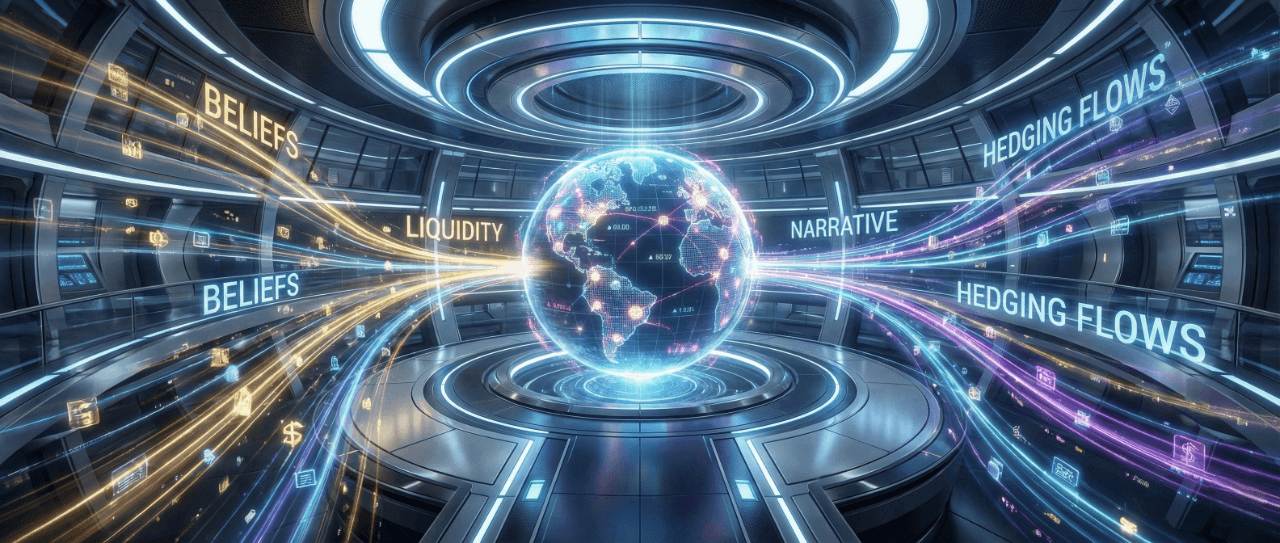
Prediction markets turn distributed beliefs into prices. As liquidity grows, those prices influence capital allocation, hedging, and narrative-driven flows across traditional and on-chain markets.

Bots as Advisors: Why Human Judgment Still Produces Alpha
The “MEV problem” is often a symptom. The real disease is fire‑and‑forget bots with no learning loop. The edge lives in feedback, friction, and human-in-the-loop execution.